Why Step-by-Step Drawing Works Better Than Free Sketching for Beginners

Many beginners start drawing with enthusiasm — and quit with frustration.

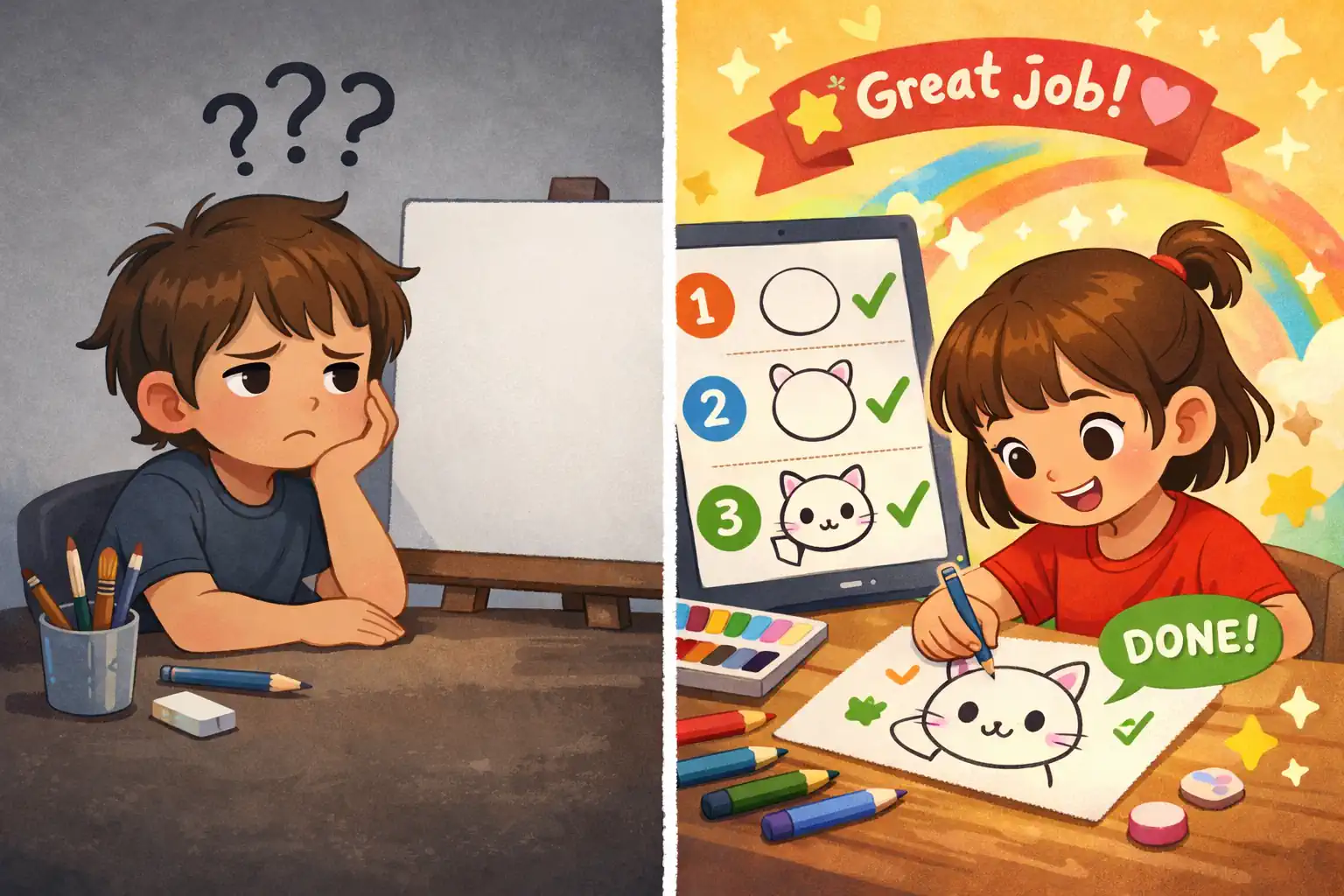
They open a blank page, start sketching freely, and quickly feel stuck. Lines look wrong. Proportions feel off. Confidence drops.

The problem isn't creativity.

The problem is lack of structure.

Here's why step-by-step drawing works better than free sketching — especially for beginners.

1. The Blank Page Creates Decision Fatigue

When beginners try free sketching, they must constantly decide:

  • What should I draw first?
  • Where should this line go?
  • Is this the right proportion?
  • What comes next?

That constant decision-making drains mental energy.

Step-by-step drawing removes unnecessary decisions. It answers the "what next?" question automatically, allowing beginners to focus on execution instead of uncertainty.

Less confusion = more progress.

2. Structure Builds Confidence Faster

Free sketching can be creatively liberating — but it assumes you already understand:

  • Proportions
  • Form construction
  • Layering techniques
  • Line control

Beginners usually don't.

Step-by-step systems break drawings into manageable layers:

  1. Basic shapes
  2. Proportion adjustments
  3. Structural refinement
  4. Details

Each completed step builds confidence. Small wins compound.

3. Guided Learning Reduces Frustration

Frustration is the number one reason beginners quit drawing.

When someone doesn't know how to fix a mistake, they often assume:

"I'm just not good at this."

Structured guidance changes that narrative.

Instead of guessing, beginners follow a logical progression. Mistakes become part of the process — not proof of failure.

Tools like Sketchdoo's AR Tracing and Photo Tracing provide the visual guidance beginners need to stay motivated.

4. Skill Develops Through Repetition, Not Random Practice

Free sketching often results in random practice. You might draw different subjects every time without reinforcing core fundamentals.

Step-by-step drawing encourages repetition of foundational skills:

  • Building shapes
  • Checking alignment
  • Controlling pressure
  • Refining outlines

That repetition strengthens muscle memory and visual accuracy.

When you practice with structured tutorials, you're not just completing drawings — you're ingraining techniques that apply to every future sketch.

5. Creativity Comes After Structure

Some worry that guided drawing limits creativity.

In reality, structure builds creative freedom.

Once beginners understand form and proportion, they can modify, adapt, and experiment with confidence.

Structure first. Freedom second.

That's why starting with interactive step-by-step tutorials and progressing to a blank canvas is the most effective learning path.

So Should Beginners Avoid Free Sketching?

Not entirely.

Free sketching is valuable — but it's more effective after foundational skills are built.

For beginners, structured, step-by-step drawing dramatically increases:

  • Confidence
  • Consistency
  • Skill retention
  • Motivation

That's why modern educational drawing platforms focus on guided learning rather than blank canvases alone.

Final Thought

If someone feels stuck learning to draw, the solution isn't "try harder."

It's "add structure."

Step-by-step guidance transforms drawing from overwhelming to achievable — and that difference determines whether someone continues or quits.

Sketchdoo is built around structured, guided drawing designed specifically for beginners. Whether you're starting with AR Tracing on real paper or exploring hundreds of interactive tutorials, you'll find the structure you need to actually improve — without the frustration.

Ready to experience the difference? Start your first step-by-step tutorial today.