How to Learn Drawing Step by Step (Beginner to Confident Artist)
Learning how to draw can feel overwhelming at first. Many beginners believe you need talent, expensive tools, or years of practice just to get started. In reality, drawing is a learnable skill, and the fastest way to improve is by following a step-by-step approach.
This guide breaks down exactly how beginners can learn drawing—without frustration, guesswork, or fear of the blank page.
Step 1: Stop Thinking of Drawing as "Talent"
One of the biggest myths in art is that good drawing comes from natural talent. Research in art education consistently shows that structured practice beats raw talent.
Drawing is a combination of:
- Observation
- Hand–eye coordination
- Repetition
- Feedback
When beginners struggle, it's usually not because they lack ability—it's because they lack guidance.
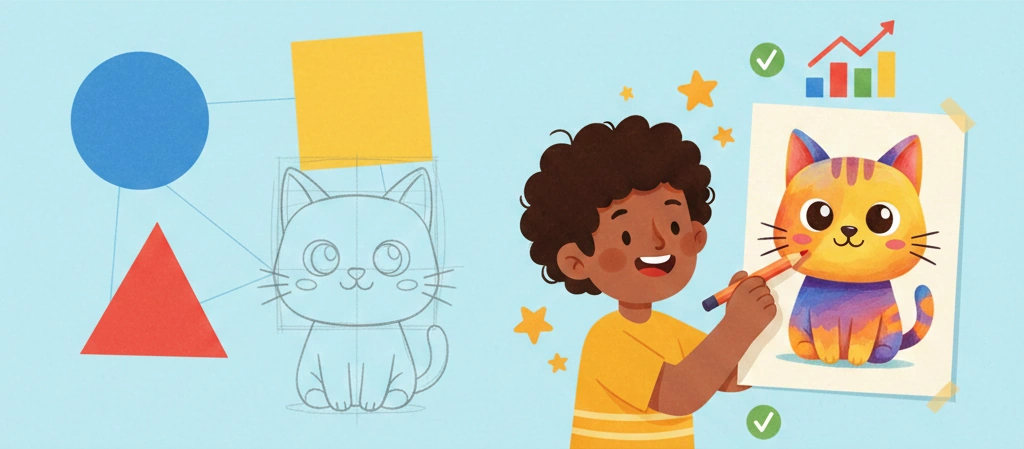
Step 2: Start With Simple Shapes, Not Finished Art
Every complex drawing is built from basic shapes:
- Circles
- Squares
- Rectangles
- Lines
Professional artists don't start with details. They block out proportions first, then refine.
Beginner mistake: Trying to draw a finished image immediately
Better approach: Build the drawing in layers
This step-by-step layering dramatically reduces frustration.
Step 3: Use Guided Drawing Instead of Guessing
Most beginners quit because they don't know what to draw next.
Guided drawing solves this by:
- Showing each step visually
- Reducing decision fatigue
- Creating momentum
This is why step-by-step drawing systems are proven to help beginners progress faster than free sketching alone. Tools like Sketchdoo's Interactive Tutorials provide exactly this kind of structured guidance.
Step 4: Trace to Learn Structure (Not to Cheat)
Tracing is often misunderstood.
When used correctly, tracing:
- Teaches proportions
- Builds muscle memory
- Improves confidence
The key is intentional tracing, followed by freehand practice. Beginners who trace first often understand form faster than those who start freehand immediately.
Try Sketchdoo's AR Tracing to practice tracing on real paper with digital guidance.
Step 5: Practice Small and Consistent
You don't need long sessions.
10–15 minutes a day is enough if your practice is structured.
Focus on:
- One subject at a time
- One improvement goal per session
- Repeating the same drawing multiple times
Progress comes from repetition, not perfection.
Step 6: Review Your Process, Not Just the Result
Beginners often judge drawings only by the final image. A better habit is reviewing:
- Where proportions improved
- Where lines became smoother
- What felt easier than last time
Tracking progress builds motivation and confidence.
Step 7: Share Your Drawings
Sharing your work:
- Creates accountability
- Builds confidence
- Helps you see progress over time
Learning to draw is not a solitary skill—it improves faster when it's shared.
Final Thoughts: Drawing Is a Skill You Can Learn
If you've ever said "I can't draw," what you likely mean is: "I haven't been taught step by step."
With the right structure, guidance, and consistency, anyone can learn to draw. The goal isn't perfection—it's progress.
Ready to start your drawing journey? Explore Sketchdoo's step-by-step drawing tutorials and begin practicing today!
